About us
We tell stories that are seen, heard and felt. Stories powerful enough to transform and remind us what it means to be human.
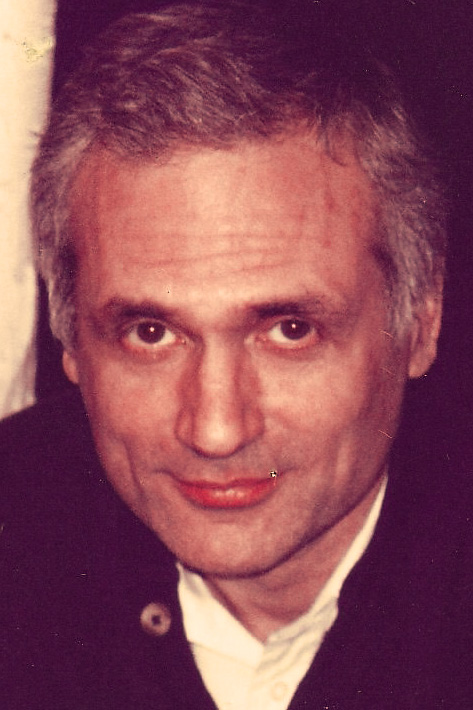
John Leekley
Founder
For as far back as I can remember, even as a boy, all I ever wanted to do was to tell stories. Storytelling for me is as necessary as breathing, it is literally all I have ever done. I come from a family of great storytellers so if you came to the dinner table, you better have a good story from the day. I was the youngest so I had to work a little harder and I probably told taller tales than anyone else in the family. But eventually I learned how to tell a good story.
I always sensed, deep in my marrow, that when the elders told the story of their origins, maybe beginning around the campfire hundreds of thousands of years ago, that story helped everyone in the tribe to better understand their own place in the cosmos, and in the family. Largely because of these stories, they came to better understand themselves.
A great story is the most powerful force in the world. All great religions and political systems, which have shaped the lives of billions of people over the whole history of man, have been based on a great story. A story that people believe so strongly that it shapes the narrative of their lives. And most people live and die by their narratives.
I began as a young man by telling stories of the history of America, because I wanted to know where I came from. I didn’t feel I could know where I was going as a man or as an artist without knowing where I’d come from. I knew from boyhood that my family had helped to found the town of Galena, Illinois, which was the main source of lead in this country in 1834. These lead mines are the reason my family emigrated from England. And in 1861, four Leekley cousins went off to fight the Civil War, willing to die to end slavery. Among them was my namesake, John Leekley. And in that town was a harness maker named Ulysses S. Grant, who would lead them off to war.
John Leekley was shot at Shiloh, but survived. His cousin George Leekley died in Andersonville prison, but in the end, the North won, and slavery, America’s original sin, was over. So this was the story I wanted to tell, the story of the men and women who struggled in this civil war, in both the North and the South. It was a rich man’s war but a poor man’s fight, and I wanted to tell the story of the common soldier. In my early twenties I began to write what would become THE BLUE AND THE GRAY novel first, and which later was made into a miniseries on CBS that was eight hours long and seen by eighty million people. That story changed, to some extent, how many Americans viewed the most seminal event in our history, how America became the nation that it is now. The novel was also on the New York Times bestseller list, and to my amazement, printed hundreds of thousands of copies.
They say that a picture is worth a thousand words, and it was around this time that I discovered a treasure trove of stories… the Pulitzer Prize photographs. Each year a photo was chosen that seemed to best summarize who we were as a nation in that year, a sort of haiku poem of each year, an image that captured the narrative of the time. So I co-wrote a book called MOMENTS: THE PULITZER PRIZE PHOTOGRAPHS, from 1942 to 1982… forty years of stories. It also became a best seller.
This success allowed me to explore my deepest impulses as a writer, I wanted to know what makes us human. The beauty of the human spirit had always gripped me and I felt that the best way to tell the story of what is human is to tell the story of what is not human. Many to our greatest stories are of hopeful monsters, creatures like Frankenstein and the legend of the vampires. This led me to create the first major television series about the legend how vampires live among us and how they live insides of us. Out of this passion came the series KINDRED: THE EMBRACED. It told the story of how vampires, who called themselves Kindred and existed uneasy in several Clans. struggled to live among humans, who hunted them.
This passion to find out what makes us human also led me to write, with my wife Rebekah, and produce the series SPAWN, based on the legendary comic book, about a man who was a spawn from hell but who struggled to regain his humanness, who feared most that he would never find redemption. I ended that tv series, in the last line of the last episode with this… “I want my humanity back!”
As my aspirations as a writer and filmmaker expanded, I wrote and directed a feature film, wrote and produced a number of well received movies, mini-series, both four, six and eight hours long, and created several tv shows, and among the most fulfilling projects was a cookbook and food blog I created with Rebekah. If I wasn’t writing and creating drama I was creating feasts in the kitchen.
Today, I am still trying to tell the story of the human spirit, and the story of America. Rebekah and I have created a new series entitled Our America, Our Stories. After 250 years, there are many many great stories to tell of the people who came before us, who shaped this country. We want to tell stories that illuminate the American experience and to make sure that the narrative of our nation includes the blood, sweat and tears of the common man and woman, they are busy creating the future of America. My heart beats with them, they are the greatest story of all.
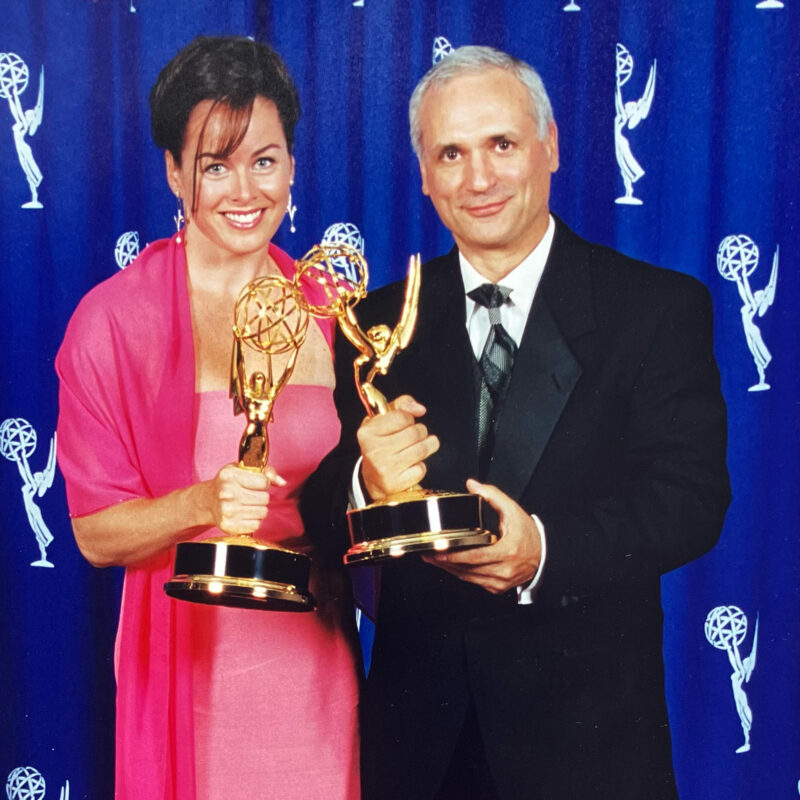
Awards
A testament to the stories we tell
Stories are the narratives of our lives. The shared dream that makes us uniquely human. There is also a collective promise in stories that, if kept, means we are transformed and compelled to act.
I am drawn to an ever evolving media landscape and to the emerging technologies that are reshaping how stories are created, shared and experienced.
Whether it’s writing a speculative fiction novel that explores the human condition, or co-creating a deeply resonant historical series Our America Our Stories, I’ve spent my life creating authentic and compelling characters who inhabit unique, meaningful worlds.
- Rebekah Bradford Leekley – President